
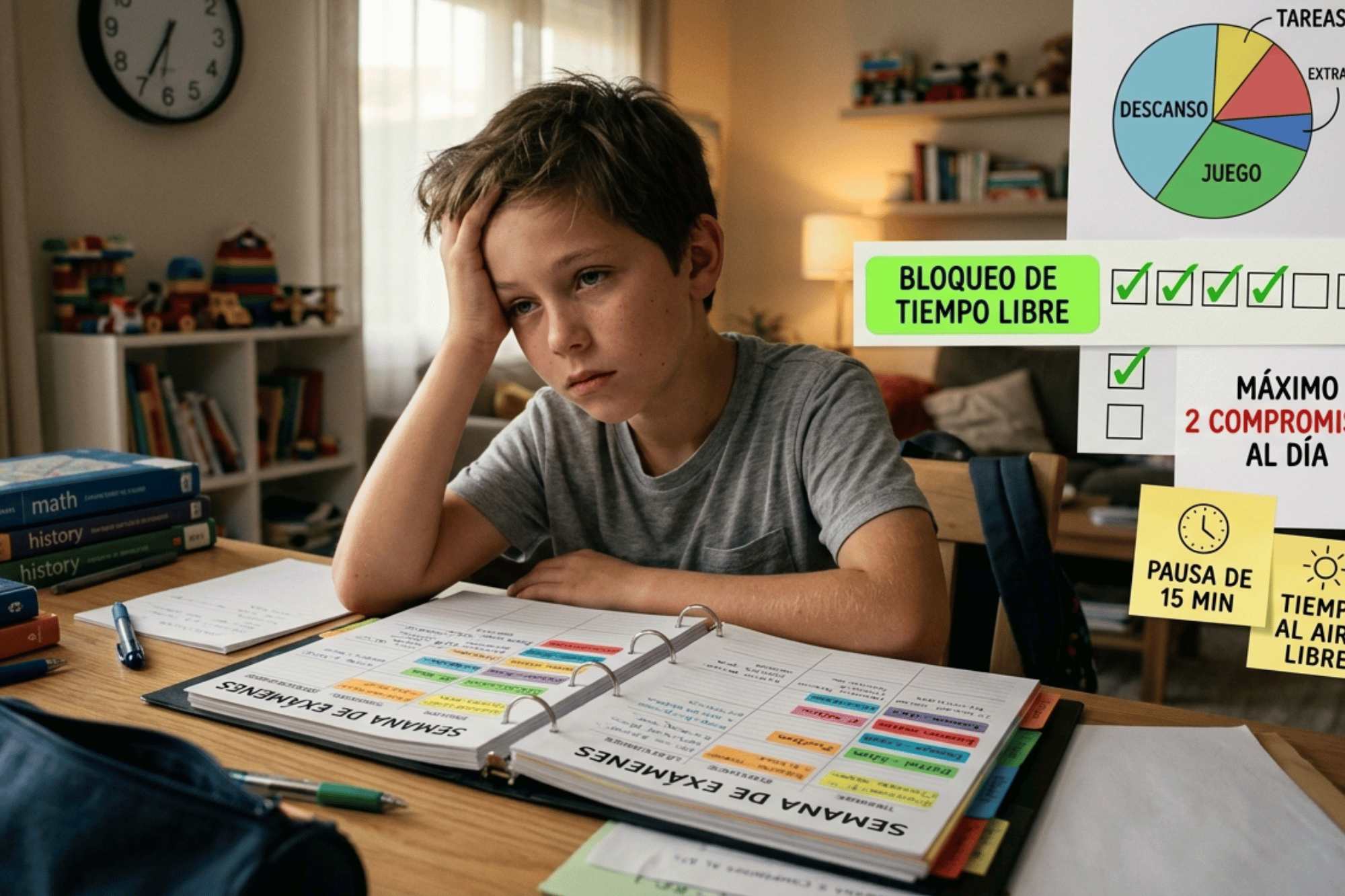
According to recent studies, childhood exhaustion affects approximately 10% to 15% of students due to an excess of activities, curricular demands, and long hours of study. Fatigue, anxiety, and poor performance are warning signs. However, statistics may vary depending on how studying is approached or carried out. The key is not to eliminate commitments, but to manage them with practical strategies: prioritizing tasks, calculating realistic time commitments, and setting healthy boundaries. Flexible education, such as online school, allows for adjusting paces without sacrificing goals. Detecting burnout early and reorganizing schedules prevents burnout and protects emotional well-being.
Discover practical strategies for managing commitments and protecting your child from childhood burnout
Today, students have more opportunities than ever to explore their interests, cultivate passions, and develop skills both inside and outside the classroom. Many manage to combine their studies with sports, volunteering, work, friendships, and family responsibilities, building a rich and diverse life. However, this fast-paced, yet enriching, environment can lead to an imbalance that is difficult to detect. Taking on too many simultaneous obligations not only generates stress, but can also trigger the dreaded childhood burnout, affecting motivation and school performance.
Therefore, it is essential to learn to reorganize priorities and set healthy boundaries. Online education offers flexible and personalized tools that facilitate this time management, allowing you to adjust your schedule without sacrificing the quality of learning. Thus, with support and planning, it is possible to enjoy all these experiences without becoming overwhelmed, promoting holistic and sustainable growth.
What are the symptoms of academic burnout that you should be aware of?
School burnout arises when the overload of academic responsibilities exceeds a student’s capacity to recover. Some early signs are persistent fatigue, irritability, difficulty concentrating, and poor performance. Detecting these indicators early allows you to prevent serious consequences and foster habits that protect emotional and cognitive well-being.
1. Experiencing anxiety
Excessive academic workload without breaks generates anxiety and depression in students, as confirmed by recent research published in the International Journal of Environmental Research and Public Health. This research found a positive correlation between these symptoms and burnout, a growing condition that affects emotional well-being. Therefore, it is urgent to balance study time with active breaks and timely psychological support, both in online private schools and traditional schools.
2. Feeling physically exhausted
High school burnout emerges as a primary sign of sustained stress. It manifests on three interconnected levels:
| Level | Main symptoms |
| Physical | Persistent fatigue, unrefreshing sleep, insomnia, or morning lethargy that makes it difficult to start the day. |
| Emotional | Feeling overwhelmed, emotional indifference, and a perception of being unable to meet academic or personal demands. |
| Cognitive | Lapses in attention, memory lapses, and difficulty making decisions, even with simple options. |
3. Constant procrastination
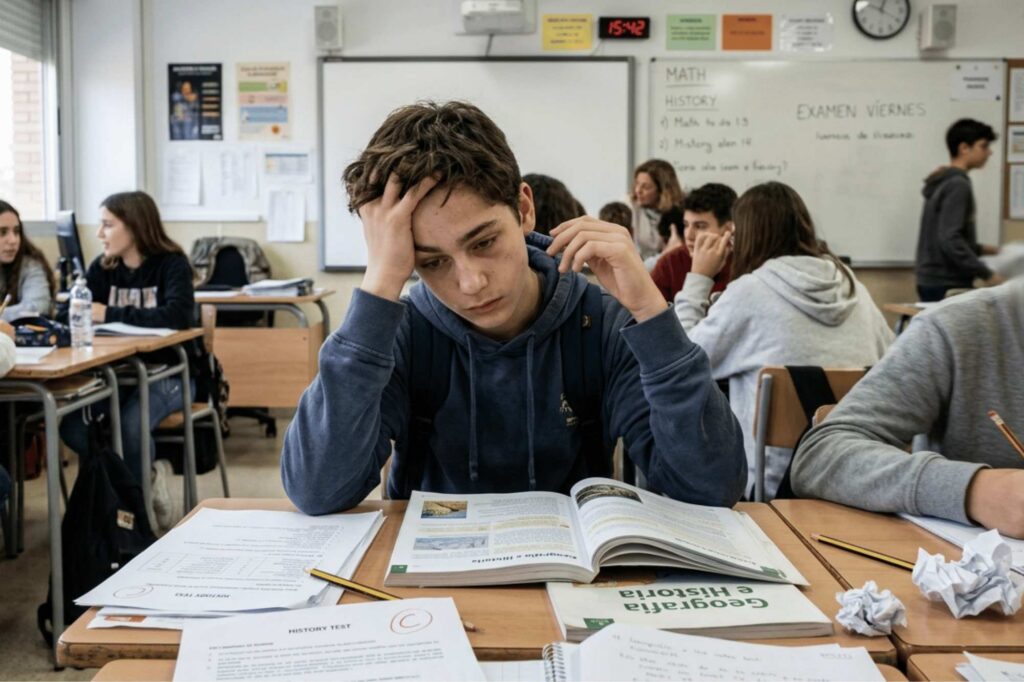
When an high school online student misses deadlines, it’s not always due to laziness, but rather ineffective time management in the face of the digital workload. Falling behind leads to a backlog of assignments, which increases anxiety and the perception of failure. This ongoing stress can childhood burnout, manifested as irritability, disengagement, and irregular sleep. Trapped in this vicious cycle, the student’s performance declines, they fall behind again, and they lose motivation.
4. Poor academic performance
Excessive academic and extracurricular commitments fragment a student’s day, preventing deep and effective study sessions. This constant overload not only diminishes the quality of learning but also precipitates childhood burnout, a state that impairs motivation, content retention, and ultimately, overall academic performance.
5. Missing deadlines
When a student misses deadlines, it’s often due to a lack of time to complete assignments. This delay accumulates more work as they try to catch up, increasing their anxiety and overload. As a result, the likelihood of further non-compliance increases, creating a vicious cycle of stress and low productivity.
6. Lack of time to relax
Overloading children’s schedules eliminates free time, where creativity and genuine play emerge. This absence of unplanned space deepens childhood burnout, as it diminishes joy and emotional flexibility. Spontaneous fun is not a luxury, but a cornerstone for raising resilient adults.
How to recover from school burnout effectively?
Recovering from academic burnout begins with recognizing the overload. When a middle school or elementary student identifies their situation, childhood burnout can be mitigated by guiding them toward sustainable habits: active breaks, homework limits, and free time. Teaching them to prioritize and disconnect fosters resilience. It’s not about doing less, but about balancing effort and recovery.
1. Prioritizing with the Eisenhower Matrix
Many students struggle to organize their tasks and goals, as prioritizing requires practice and self-awareness. Mastering this skill allows them to distinguish between what truly matters, what drives their objectives, and what they can let go of without guilt. An effective tool is the Eisenhower Matrix, which classifies tasks according to urgency and importance:
- Urgent and important: address immediately.
- Important but not urgent: schedule.
- Urgent but not important: delegate.
- Neither urgent nor important: eliminate.
By applying it, students can clearly visualize where to focus their energy, reducing anxiety and gaining control over their time.
2. Calculate the time and energy required for each activity
Underestimating the actual time required for schoolwork is a common mistake: what’s estimated to take thirty minutes often stretches to an hour, generating frustration and accumulated stress. To help your student clearly understand their daily capacity, suggest creating a weekly inventory together of all their commitments (classes, studying, sports, family), assigning each one an estimated time in minutes or hours. Then, encourage them to measure the actual time they spend on each activity over several days. This objective comparison will reveal discrepancies and help them build a more realistic routine.
3. Create a weekly activity chart
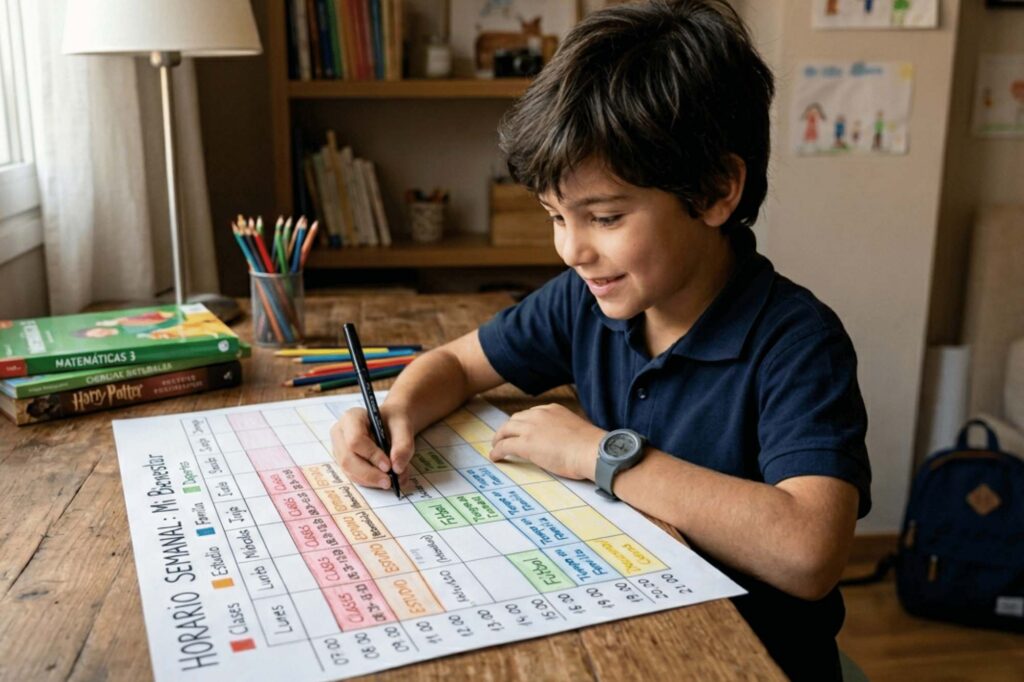
On a weekly template, the student writes the days in each column and records the hours spent on classes, studying, family, and friends. This helps them visualize how much time their daily obligations consume. Then, they add desired activities (sports, hobbies, workshops) with their estimated duration, remembering to factor in travel and preparation time. This exercise prevents childhood burnout by showing that time is finite and that rest and leisure deserve just as much time as studying.
4. Setting healthy boundaries
Setting boundaries and saying «no» is especially difficult for children, who often fear being left out or missing out on valuable opportunities. Social pressure, family expectations, or the belief that certain activities will improve their academic and professional future push them to accept commitments that exceed their actual capacity. This excess of responsibilities (clubs, sports, tutoring) not only fragments their time but also fuels childhood burnout, a silent state that erodes their motivation and well-being.
To counteract this, the first step is to offer genuine and non-judgmental listening. Ongoing and honest dialogue between adult and child helps prioritize what truly fuels their dreams. Recognizing that not everything can be done and that giving up certain options is not a failure but an act of self-care prevents burnout.
The flexible education approach
Online special education offers a unique advantage in combating burnout. Virtual environments allow for:
- Personalized pacing: students progress according to their ability.
- Reduced downtime: eliminates commuting and waiting.
- Flexible scheduling: adapts study time to periods of peak concentration.
This modality isn’t a magic bullet, but it provides a framework that facilitates the implementation of all the strategies mentioned.
Your ally against childhood burnout
Childhood burnout isn’t inevitable; recognizing its signs and reorganizing priorities makes the difference between burnout and healthy growth. Online special education offers precisely that flexibility to adapt paces, protect emotional well-being, and regain balance without sacrificing important goals. Interested in knowing if online learning fits your child’s lifestyle? Visit MGM Online Academy and discover how online school works. There you’ll find concrete tools to helping your child cope with burnoutand transform their educational experience.
Frequently asked questions
Clear answers to protect your child from academic and emotional burnout:
At what age is childhood burnout most common?
Childhood burnout can appear as early as age 8, but it is most common in early adolescence (11-14 years old), when academic and social demands increase.
How long does it take to recover from school burnout?
Recovery from school burnout can take anywhere from 2 weeks to several months, depending on the severity and the consistent implementation of healthy habits.
Does online education reduce the risk of childhood burnout?
Yes, online education reduces the risk of childhood burnout by eliminating commuting, allowing for flexible breaks, and adapting the schedule to the student’s natural rhythms.