
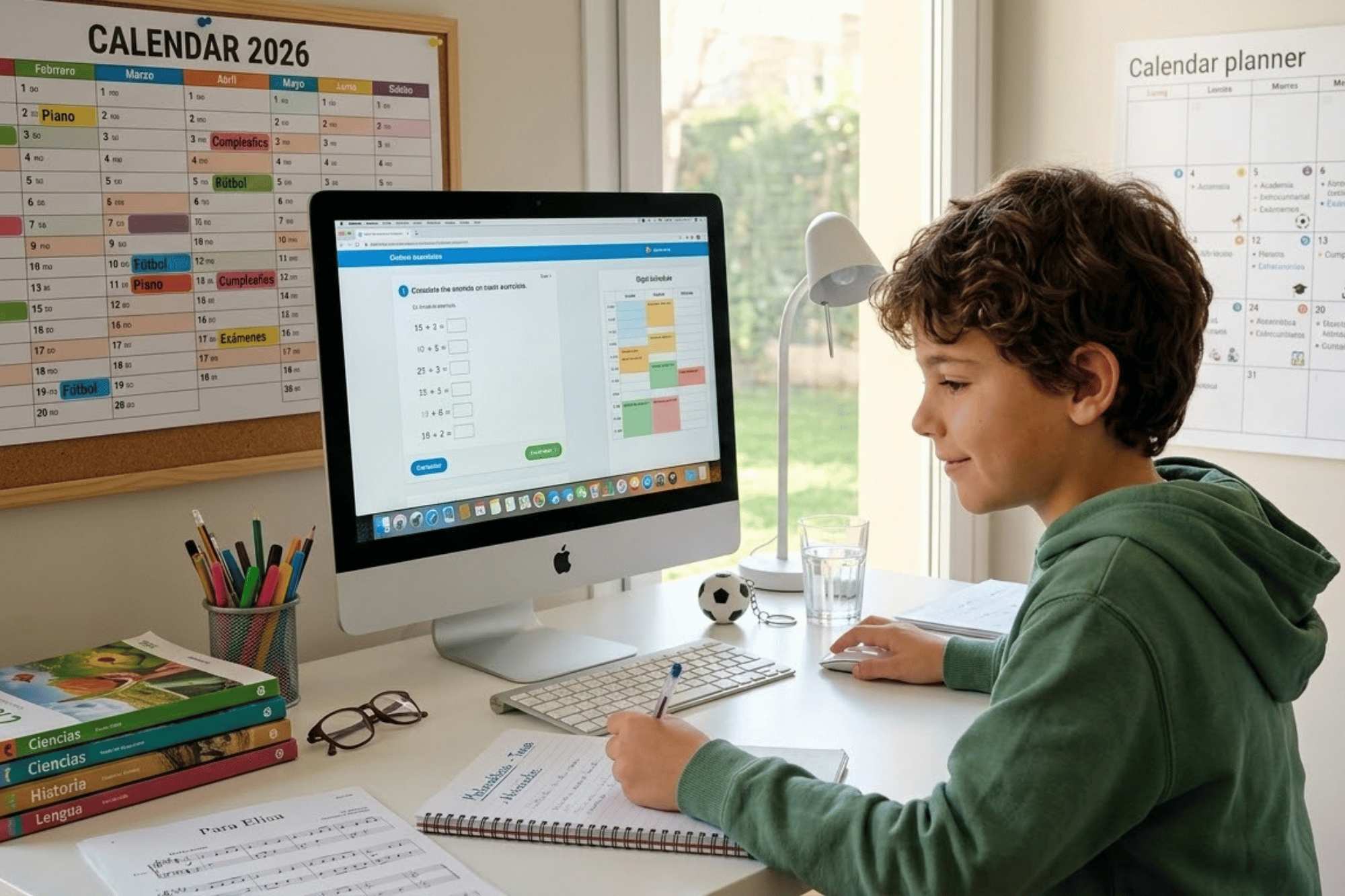
The balance between academics and extracurricular activities in online school is achievable through flexible schedules, smart prioritization, and digital organization tools. Students who participate in extracurricular activities are 15% more likely to improve their academic performance, according to the U.S. National Center for Education Statistics, as long as they maintain a structured approach that integrates sports, clubs, or music without sacrificing grades or personal well-being.
Learn how to balance academics and extracurricular activities online to boost success without stress
Why is it important to balance studies and personal activities in virtual education? Achieving a harmonious balance between academic life and personal development is essential for a truly comprehensive education. In a virtual private school environment, students not only access theoretical knowledge within the digital classroom, but also find unique opportunities to apply that learning in real-world contexts. The synergy between study and these practical experiences deeply enriches their education.
Participating in these types of initiatives allows students to develop essential soft skills such as teamwork, effective collaboration, and assertive communication. In addition, mastering time management to successfully coordinate academics and extracurricular activities prepares young people for higher education, as university admissions committees value consistency and demonstrated commitment.
Proven benefits of extracurricular activities for virtual school students
The balance between academics and extracurricular activities in virtual schools maximizes academic performance while developing essential life skills, such as:
| Benefit | Impact on students | Evidence/Result |
| Academic performance | Improved grades and comprehension | 15% increase according to NCES |
| Time management | Effective schedule organization | Increased productivity in assignments |
| Social skills | Collaboration and leadership | Quality interactions in virtual environments |
| Mental health | Stress reduction | Lower risk of academic burnout |
| University profile | Competitive differentiation | Greater acceptance into selective programs |
Improves academic performance
Students who participate in extracurricular activities develop more effective study habits and discipline, which directly translates into better grades. The need to organize their time between academic and personal obligations forces them to optimize their study hours.
Strengthens self-esteem and personal confidence
Mastering skills outside the traditional academic curriculum (such as playing an instrument, competing in sports, or leading a club) creates a sense of accomplishment that reinforces the student’s positive self-perception.
Connects theoretical lessons with practical applications
Extracurricular activities allow students to visualize the real-world usefulness of concepts learned in science, math, or literature classes, reinforcing meaningful learning.
What are the risks of overcommitting to extracurricular activities?

Participating in clubs, sports, or arts offers significant advantages, but too many commitments can have negative consequences that affect overall performance. When students sign up for too many options without proper organization, the balance between academics and extracurricular activities is easily disrupted.
Warning signs of overload
- Constant overwhelm that paralyzes the ability to complete tasks and projects.
- Deprivation of restful sleep, leading to chronic fatigue and poor daily performance.
- Neglect of mental health warning signs and elimination of essential physical wellness routines.
- Failure to meet academic deadlines or confusion with practice schedules.
Effective strategies for balancing academics and extracurricular activities
Establishing a flexible schedule from the outset allows students to successfully integrate their homework and extracurricular activities without sacrificing their well-being. The key is to prioritize commitments, use digital organization tools, and communicate clear boundaries from day one. Discover effective strategies for achieving this:
1. Prioritize academic responsibilities as a fundamental basis
In online education, organizing time is essential to prioritize academic responsibilities without neglecting other areas. Implementing a physical planner or digital calendar (Google Calendar, Notion, Trello) allows you to clearly record tasks, projects, deadlines, and study blocks. This weekly visualization facilitates strategic planning for each day, helping to distribute hours wisely between obligations and breaks.
2. Select meaningful extracurricular activities
Selecting activities that students are truly passionate about is key to preventing burnout. When they choose meaningful options, they strengthen their self-esteem while boosting their academic performance. There are currently multiple alternatives:
| Type of activity | Modality | Examples |
| Arts | Virtual/In-person | Art, music, theater, photography clubs |
| STEM | Virtual | Robotics, programming, science clubs |
| Sports | In-person | Soccer, swimming, track and field, martial arts |
| Leadership | Virtual/In-person | Student government, debate, volunteering |
3. Develop a structured schedule that is visible to the whole family.
Maintaining clear visual organization transforms time management. Placing a family calendar in a common space allows students to visualize their daily commitments, promoting autonomy and punctuality. This practice turns a rigid schedule into a flexible tool that adapts to unforeseen events, reducing stress and improving productivity.
4. Practice self-care and stress management.
To avoid burnout in online special education, self-care should be as much of a priority as any class. Taking intentional breaks to recharge is essential. The most effective strategies include:
- 5-10 minute mindfulness sessions.
- Listening to relaxing music between study blocks.
- Reading for pleasure (non-academic).
- Deep breathing before exams or presentations.
How does online school support complex schedule management?
The flexibility of online education becomes a strategic advantage for students with demanding schedules, whether they compete in high-performance sports, pursue the arts, manage a business venture, or travel frequently. Adapting virtual learning to these lifestyles requires:
- Consistent study schedules that are adaptable to extracurricular commitments.
- Effective prioritization of academic tasks according to deadlines.
- Open communication with teachers and counselors when difficulties arise.

The advantage of private online schools
The flexibility of online private schools transforms the way students pursue their passions without sacrificing their academic education. Unlike the traditional model with rigid schedules, these institutions allow the school day to be organized around personal goals and family obligations. Students must meet state requirements to earn a high school diploma, but the freedom to structure their study time makes a significant difference in their overall development.
Frequently asked questions about balancing academics and extracurricular activities
We answer the most common questions about how to organize academics and extracurricular activities in virtual education, achieving balance and well-being without stress:
How many extracurricular activities are recommended for an online school student?
Ideally, students should participate in one or two meaningful activities that they are truly passionate about. This allows them to devote quality time without compromising their academic performance or necessary rest.
What should I do if my child shows signs of exhaustion from too many activities?
Prioritize an open conversation to identify which activities cause stress versus satisfaction. Consider temporarily reducing extracurricular commitments and establish mandatory breaks in the weekly routine.
Do universities value the quantity or quality of extracurricular activities more?
Admissions committees value depth, consistency, and leadership demonstrated in a few activities significantly more than superficial participation in multiple options. A student who excels in one activity over several years projects genuine commitment and passion.
How can parents support this balance without being authoritarian?
Establish a visible family schedule together, review commitments weekly, and have regular conversations about how the student feels about their workload. Respectful support is more effective than imposition.
Enjoy academics and extracurricular activities with online school
Ready for your child to reach their full potential? Thanks to the flexibility of online education, students can develop their artistic, athletic, or technological passions while excelling in their studies. At MGM Online Academy, mastering the balance between academics and extracurricular activities is a daily reality. Discover a new educational model in Miami that adapts to your family’s dreams. Visit our website, explore our innovative programs, and learn how we can boost your student’s overall success today.