
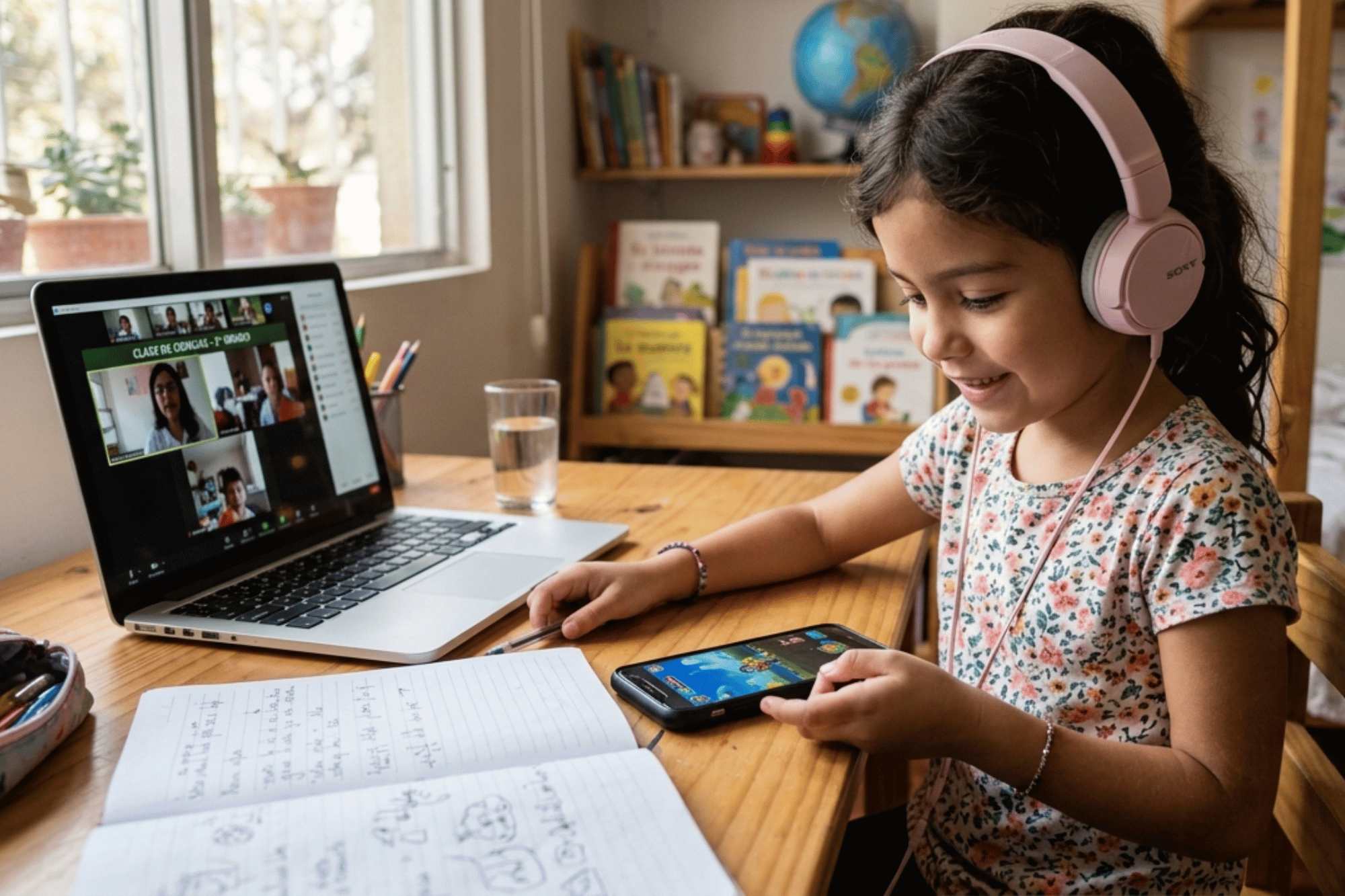
Students check their phones an average of 64 times during the school day, spending almost a third of their day on their devices, which affects their concentration and academic performance, according to a study published in JAMA Network Open (2026). Nomophobia, or the irrational fear of being without a mobile phone, especially affects teenagers and young adults, and in virtual learning environments, it can intensify as the line between studying and digital entertainment blurs. The best solution is to establish structured digital boundaries, combined with psychological support and pedagogical strategies adapted to the online learning environment.
Learn how to identify and overcome mobile phone addiction in online school students.
Nomophobia is affecting more and more students. Knowing its warning signs, understanding its impact on virtual learning, and applying practical strategies to establish effective digital boundaries at home makes a big difference.
Meaning of nomophobia and why it affects students
The term nomophobia comes from the English expression «no-mobile-phone phobia» and is defined as the irrational fear of being without a mobile phone or being unable to use it. This disorder, which has emerged in the 21st century as a consequence of globalization and technological advances, is characterized by an excessive dependence on the device that goes beyond a simple habit.
Nomophobia is not just a whim or a passing fad. It is a mental health problem that can trigger extreme anxiety when a person’s battery dies, they lose signal, or they simply don’t have their phone with them. Currently, more than 7.4 billion smartphones are in use worldwide, representing approximately 90% of all mobile phones. This massive adoption makes nomophobia a global phenomenon.
This disorder particularly affects younger generations, who have grown up immersed in a digital environment and have developed a dependency on their devices. Nomophobia can be considered an anxiety disorder, affecting not only mental health but also academic performance and social relationships.
Nomophobia is, therefore, a disorder that generates an irrational fear of being without a mobile phone. Although not officially recognized in diagnostic manuals, it affects mental health (potentially triggering anxiety, depression, and self-esteem issues), academic performance (due to constant distractions and loss of concentration), and social relationships (by fostering isolation and reducing face-to-face interactions).
Symptoms of nomophobia: warning signs in students
The symptoms of nomophobia can manifest in various ways, from compulsive behaviors to physical and emotional responses. Identifying them early is crucial to intervening and helping students regain control over their relationship with technology.

Among the most common symptoms are:
| Category | Specific symptoms |
| Behavioral | Prolonged phone use, reducing time for studying and social leisure. |
| Emotional | Anxiety, nervousness, irritability, and distress when the device is unavailable. |
| Cognitive | Difficulty concentrating, compulsive checking of notifications. |
| Physical | Tachycardia, tremors, eye strain, neck pain, and respiratory problems. |
| Social | Isolation, preferring digital interaction over face-to-face contact. |
In the case of students, these symptoms can translate into lower academic performance, difficulty keeping up with online classes, and a decline in interpersonal relationships. Nomophobia can create a vicious cycle: more anxiety leads to more phone use, and more use leads to greater dependence.
How does nomophobia affect online learning?
Nomophobia, as an cell phone anxiety disorder, presents a particularly significant challenge for students participating in learning online school programs. These students, who already spend a large part of their time in front of screens, face the paradox of having to use digital devices for studying while simultaneously battling the constant temptation to use them recreationally.
Recent studies with 1,630 young people between the ages of 12 and 20 confirm that students who acknowledge that their academic performance suffers due to excessive phone use exhibit greater anxiety, nervousness, and discomfort when they cannot immediately access their devices. This anxiety intensifies in situations of digital disconnection, especially during internet outages or in environments where access is restricted, since the phone has become a vehicle for interpersonal connection and emotional security.
For online students who don’t want to leave home, nomophobia can become a vicious cycle. Being in an environment where their mobile phone is always within reach, the temptation to check it during virtual classes is constant. This generates what experts call «attention residue»: when a part of the brain remains distracted by the last task performed (such as checking social media), even when trying to concentrate on studying.
The real impact on the virtual classroom
Online education is affected in several ways. First, the ability to concentrate decreases significantly when a phone is present, even if it’s not being actively used. Second, constantly switching focus between the class and the mobile device reduces productivity and academic performance. Third, the anxiety generated by not being able to check the phone during class can interfere with learning and information retention. Nomophobia directly affects working memory, which is fundamental to online learning.
Strategies to combat nomophobia in online school students
Many online private schools implement programs to help students manage their relationship with technology. The key is to establish clear boundaries that allow students to benefit from the advantages of digital learning without becoming addicted.
1. Create phone-free spaces and times
Identifying areas in the home where phone use is not allowed can help establish physical and digital boundaries. If the student has a designated desk for attending classes or doing homework, making it a phone-free space is essential. It is also helpful to set specific times for device use, for example, allowing its use before the first class but not during study hours.
2. Set phone limits
Device settings offer powerful tools to combat nomophobia. Some of these include:
- Time limits for apps: Many phones allow you to set limits for apps like social media or games.
- Turning off notifications: This reduces FOMO (fear of missing out) and the anxiety caused by accumulated notifications.
- Do Not Disturb mode: Silences messages and calls during study time.
- Grayscale mode: Turns the screen to black and white, making it less appealing.
3. Involve the student in the process
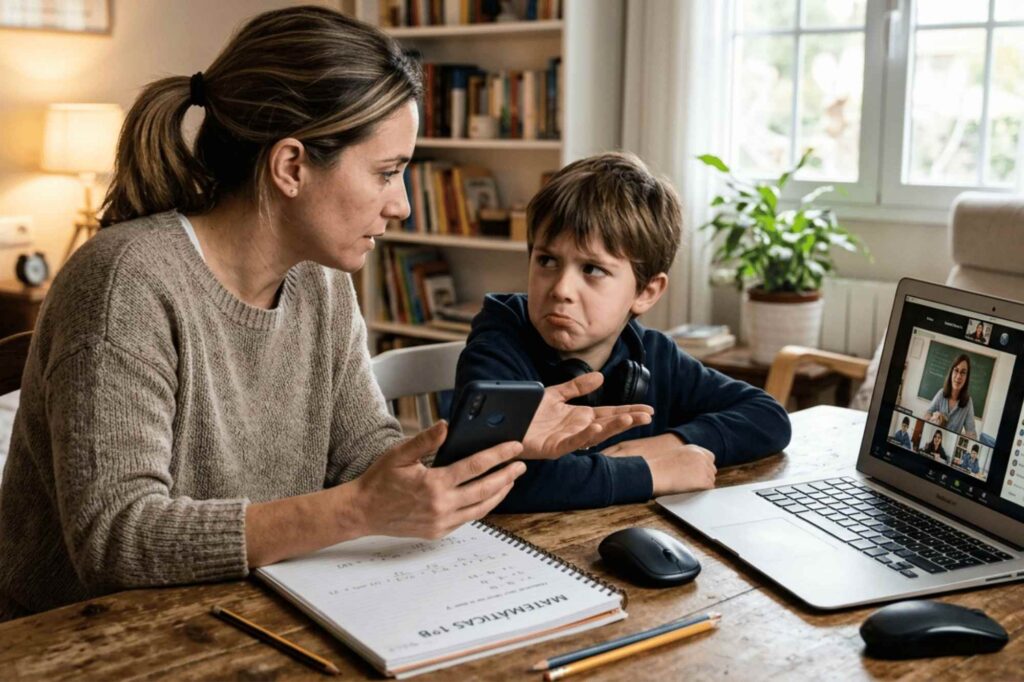
A student is more likely to accept changes if they understand why they are necessary. Validating their feelings about their phone and helping them identify what compels them to pick it up when they know they shouldn’t can be very effective. Asking them if they are seeking to connect with others, if they feel they are missing out, or if they are looking for stress relief can help find healthy alternatives. Nomophobia is best combated with empathy rather than prohibitions.
Psychological phenomena related to nomophobia
Nomophobia is not the only psychological phenomenon associated with excessive phone use. Other related disorders and behaviors deserve attention:
- Textaphrenia: the apprehension that a text message has arrived when it hasn’t.
- Phantom vibrations: the sensation that the phone is alerting you when it isn’t.
- FOMO (Fear Of Missing Out): the fear of missing something important happening in the digital world.
- Phubbing: the act of ignoring people in the physical environment to pay attention to the phone.
Does your child need help managing their relationship with technology?
At MGM Online Academy, we understand the challenges students face in today’s digital environment. Our educational programs incorporate strategies to promote healthy technology use, supported by specialized psychologists and educators. Contact us today to discover how we can help your child reach their full academic potential without falling into digital dependency.
Frequently asked questions
We answer the most common questions about this digital disorder that affects academic performance and youth well-being:
Is nomophobia considered a mental illness?
According to the World Health Organization, nomophobia is not classified as a specific disorder, but it is recognized as an emerging mental health issue that can trigger clinical anxiety and affect overall well-being.
What is the difference between nomophobia and mobile phone addiction?
Nomophobia is the fear of being without your phone, while addiction is compulsive use. Both are related, but nomophobia focuses on anxiety about lack of access, not just excessive use.
How can online schools help?
Online schools are implementing digital disconnection policies, such as recommending screen time limits and device-free zones. They also offer educational resources on various anxiety disorders and provide psychological support within their special education programs to promote digital well-being in the educational setting.