
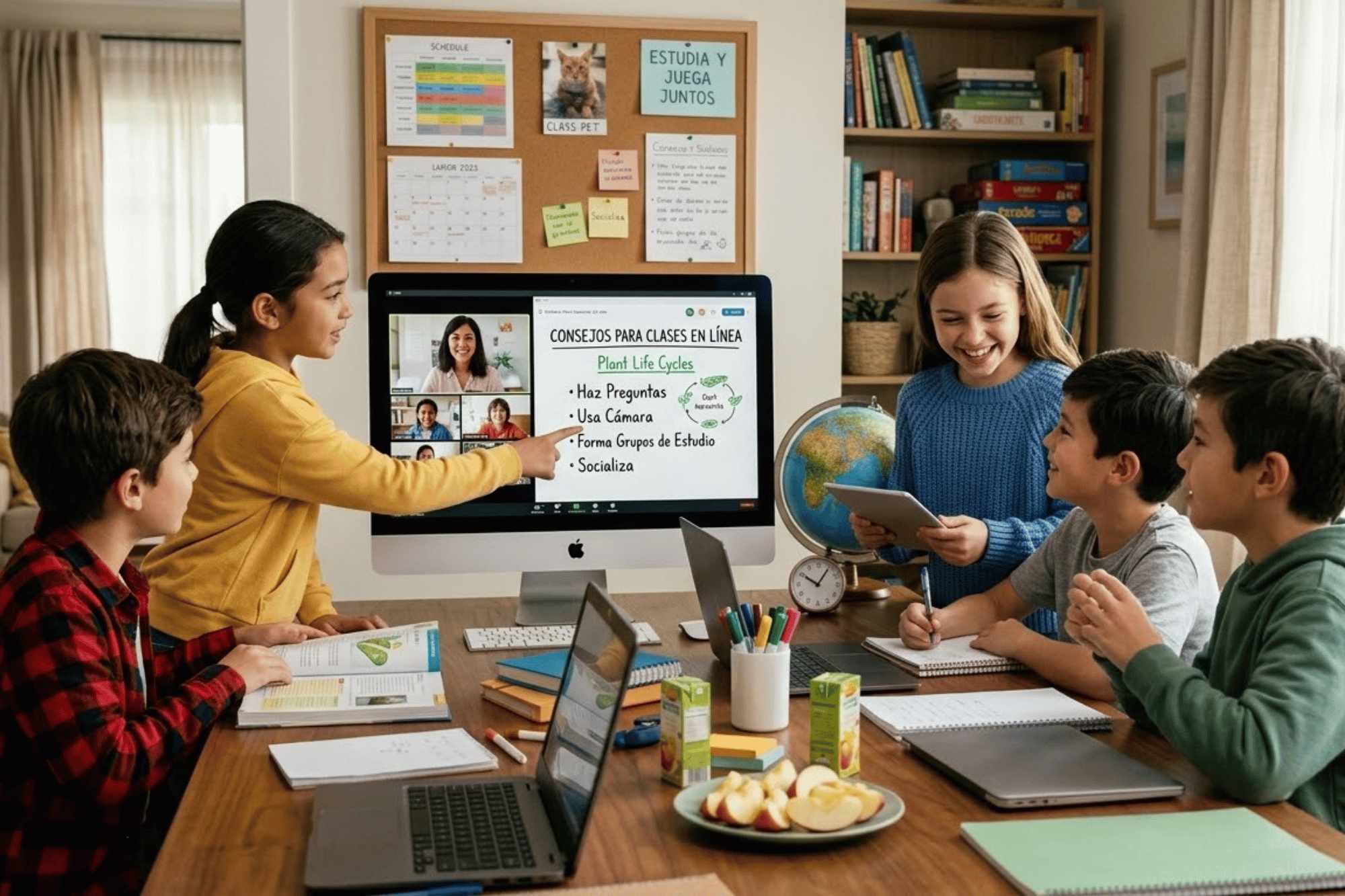
According to a study by the National Center for Educational Statistics, a large majority of online students have reported that the lack of social interaction is their biggest challenge—contrary to the popular belief that technology limits friendships. When families think of school socialization, they picture recess or group projects, but online school lessons offer equally valid opportunities to build meaningful relationships. The digital connection is just the starting point. These advice for online classes will help you transform your children’s virtual experience, creating authentic bonds that transcend the screen and take advantage of the many ways to interact that today’s technology offers.
Discover advice for online classes that turn virtual learning into lasting friendships
Contrary to popular belief, virtual education offers multiple opportunities to connect authentically. The key lies in applying the right advice for online classes and going beyond the academic. With the right actions, the screen becomes a bridge to genuine friendships that transcend distance. Here are the most effective strategies for online students to turn pixels into people:
1. Join virtual and in-person clubs.
School clubs are the social heart of virtual learning, creating instant connections between students who share the same passions and interests.
Virtual clubs
From academic clubs to creative hobbies, students at online private schools can choose from a variety of virtual clubs and activities to explore their interests while meeting new people. For example, science enthusiasts can join clubs where they meet virtually to analyze phenomena, while others explore options such as Art Club, Chess, Kindness Club, Arts and Crafts, e-sports teams, theater and performing arts, leadership, and technology. These virtual clubs are typically tailored to specific grade levels, allowing students to interact with peers of similar age and skill levels.
In-Person clubs
For families looking for in-person socialization, these tips for online classes include exploring community groups that complement virtual learning with face-to-face interactions:
| Club type | Main benefit | Example activity |
| 4-H club | Social awareness and collaborative work. | Hands-on science and agriculture projects. |
| STEM clubs | Leadership and team problem-solving. | Robotics and science fairs. |
| Music (Orchestra, Band, Choir) | Collective artistic expression and discipline. | Concerts and live performances. |
| Language programs | Cultural immersion and communication. | Conversational exchanges and cultural workshops. |
| Sports teams | Teamwork and physical activity. | Local soccer, basketball, and other leagues. |
| Service clubs | Empathy and social commitment. | Volunteering at food banks or shelters. |
2. Join a study group.
Study groups bring together students from different families who are learning from home, making them ideal spaces for socializing while maintaining academic focus. Led by tutors during the school day or in the afternoons, these small teams allow students to support one another with homework and projects. Beyond collaborative learning, shared breaks and informal conversations strengthen genuine bonds among classmates.
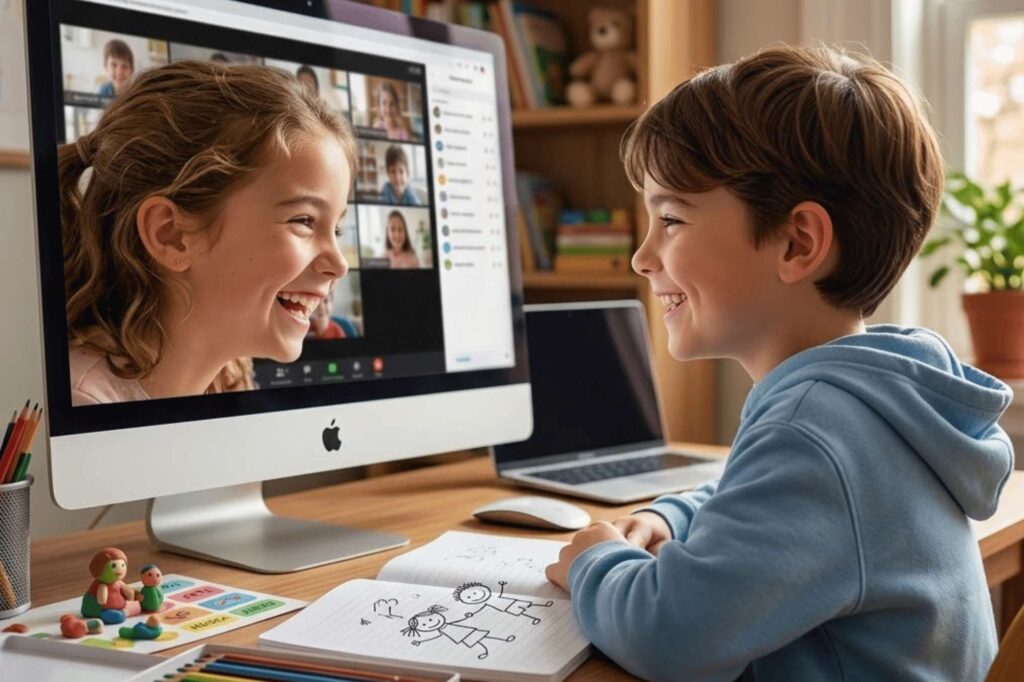
3. Get actively involved in your community.
Participating in the community allows online students to forge friendships and actively contribute to social well-being, all through:
Volunteer opportunities
Since online students complete much of their education from home, these advice for online classes include getting involved in community organizations through volunteering. Opportunities can align with the student’s interests, such as:
- Collecting and donating clothing and food for families in need.
- Starting a community garden to beautify the neighborhood.
- Walking dogs at animal shelters, providing affection to abandoned pets.
- Helping out at special community events, such as health fairs at the local library.
Sports and activities
Sharing common activities, such as community sports or organizations, is a powerful way to build friendships outside the virtual classroom. Many neighborhoods have local youth sports teams. From cheerleading to soccer, students learn teamwork and develop strong social bonds. If sports aren’t their thing, the arts offer alternatives. Community theaters and youth orchestras provide spaces for creative expression.
4. Participate in field trips and school outings.
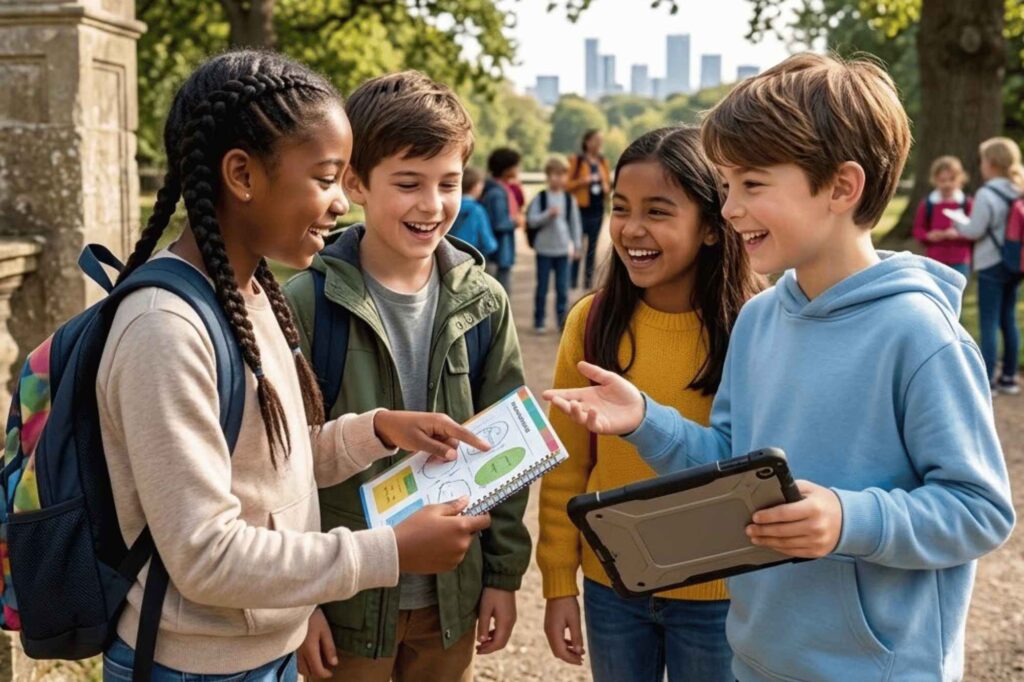
Beyond academic learning, field trips are an invaluable social setting where students strengthen friendships in a relaxed environment. These advice for online classes come to life when students in special education programs participate in organized outings to explore historic sites, museums, parks, aquariums, and zoos. By embarking on these adventures, students who previously knew each other only virtually have the opportunity to connect on a deeper level.
5. Go to summer camp.
Maintaining an active social life is essential, but it becomes especially important during the summer, when academic interaction decreases. Applying these advice for online classes during the school year is important, but summer offers unique opportunities. For those attending a virtual middle school, summer camps are an ideal alternative when it’s difficult to maintain friendships outside of school hours. These settings offer invaluable benefits: genuine socialization, reduced screen time, physical activity, and the creation of lasting memories.
6. Prioritize family time
Culture and family form the fundamental foundation for the development of every student’s social skills. The home represents the first and most influential social group, where parents teach the art of conversation, empathy, and building meaningful relationships. A distinct advantage of virtual education is the increased quality time students spend with their families. These daily interactions become powerful tools for honing interpersonal skills. A student who feels secure in their family environment extends that confidence to forming new friendships, successfully applying the advice for online classes.
The perspective of a specialist in social-emotional development
Just as specialists at the Child Mind Institute emphasize the importance of context in educational socialization, psychologist and researcher Peter Gray, recognized for his work on play, education, and self-directed learning, and author of Free to Learn (2013), as well as a contributor to Psychology Today, states:
«Socialization in virtual environments is not inherently inferior to in-person socialization; it is simply different. My research with students in private online schools reveals that those who participate in at least three structured extracurricular activities (combining virtual and in-person options) demonstrate levels of social competence equivalent—and in some cases superior—to their peers in traditional schools.
The key lies in intentionality. Families who systematically apply these advice for online classes, creating a ‘social ecosystem’ around virtual education, help their children develop deeper and more selective friendships. It’s not about the quantity of interactions, but rather the quality and consistency.”
The psychologist Gray specifically recommends that students in special education programs have a “personalized socialization plan” that identifies their interpersonal strengths and areas for growth, integrating it into the Individualized Education Program (IEP).
Frequently asked questions
We address the most common questions about how to build genuine friendships and apply these tips to your children’s online education:
Does online education really limit my child’s social skills?
No, not if you follow the right advice for online classes. The key is to proactively seek out opportunities for interaction—both digital and in-person—that complement academic learning.
How do I find in-person clubs near my home in Miami?
You can search community directories, your city’s parks and recreation website, or ask at public libraries. Many organizations, such as 4-H or local sports leagues, have chapters in specific neighborhoods.
What types of special education programs offer social activities?
The best private online schools organize field trips and inclusive activities where students in special education programs can socialize in safe environments tailored to their needs, such as exploring museums or participating in volunteer work.
Are virtual clubs effective for making real friends?
Yes. Virtual clubs bring together students with common interests (such as e-sports, art, or chess), fostering deep conversations and collaborations, and creating friendships based on shared passions—often with peers from different regions and cultures.
Socializing in an online school can be easy.
Do you think virtual learning limits your child’s social life? At MGM Online Academy, we prove otherwise. We implement the best advice for online classes, transforming digital education into a socially rich experience where your child will build genuine, lasting friendships. Our students don’t need a physical classroom to develop strong social skills while they learn. Discover today everything our private online school in Miami has to offer your family.