
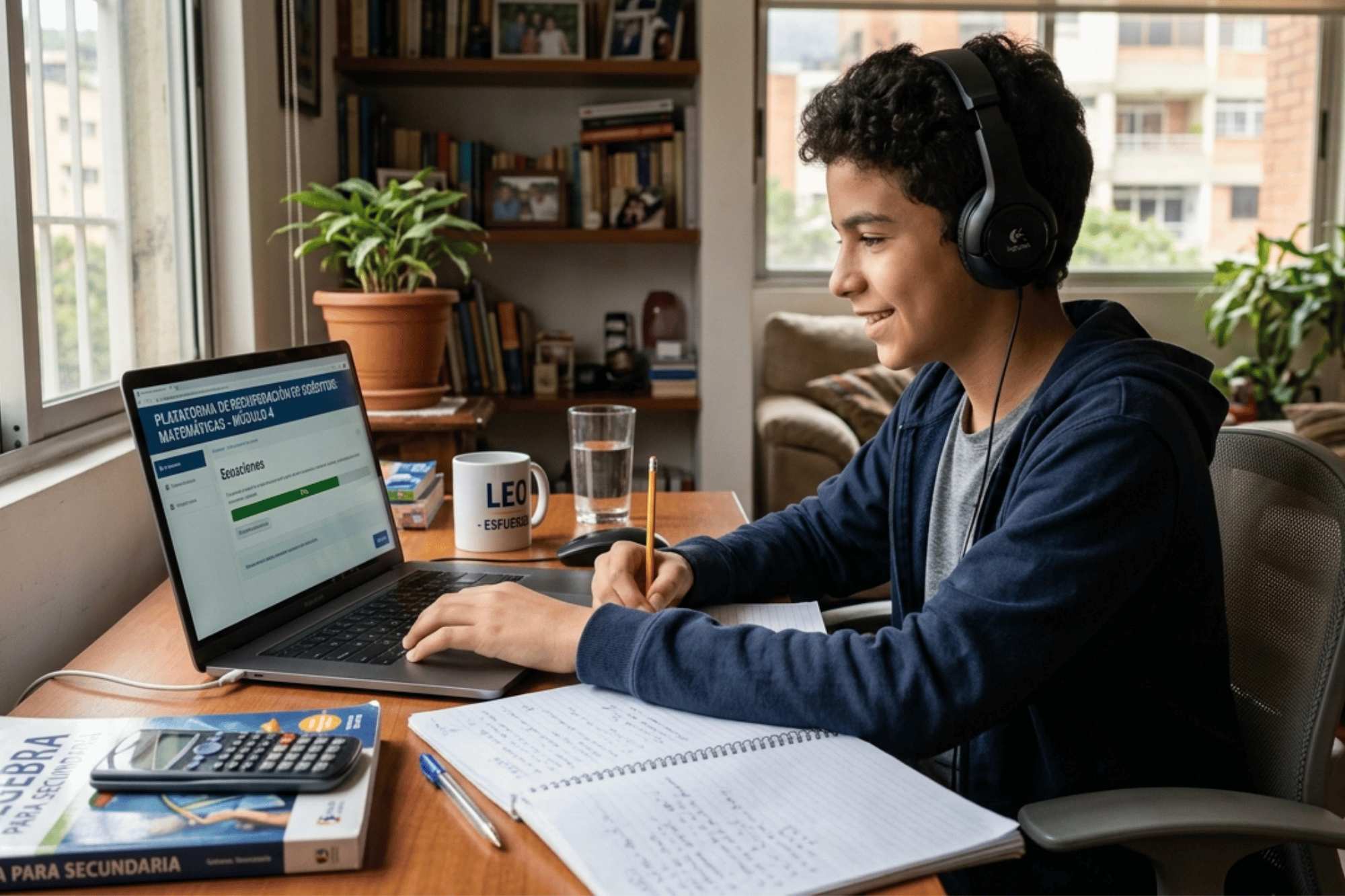
Credit recovery is one of the most effective and accessible solutions for students facing setbacks in high school, provided it is implemented with personalized support and rigorous academic standards. Approximately 6 to 8 % of high school students participate in credit retrieval programs, a strategy that, instead of repeating the year, offers an opportunity to catch up. This article offers some proven strategies to help your child catch up on credits quickly and finish the year successfully, adapting to online school without stress.
Discover key strategies for catching up on credits, adapting to virtual learning, and achieving academic success
The fact that your children are falling behind their classmates can cause anxiety for the whole family. That’s why it’s essential to talk openly about what they can expect before they start their new online school classes. Successful credit recovery begins with proper mental preparation and logistics.
Create a detailed plan to help them adapt to the new virtual school environment. Personalize learning spaces, familiarize yourself with new technologies, portals, or apps before the first day, and gather all the necessary materials. Make sure your child is excited and prepared.
Key steps for initial preparation
Four practical steps to successfully begin your academic recovery:
- Set clear expectations regarding the additional workload.
- Create a weekly schedule with priority due dates.
- Schedule regular breaks every 45-50 minutes of study.
- Celebrate every small achievement with family rewards.
This preparation is essential for a smooth and effective credit recovery.
Why is it crucial to talk to teachers for academic recovery?
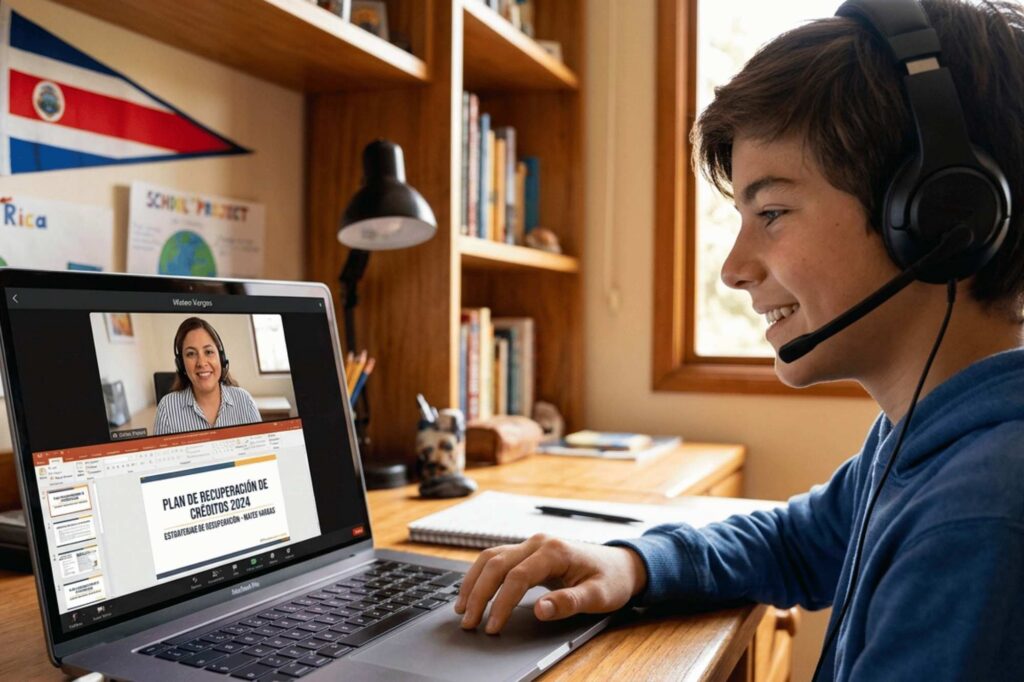
Teachers are one of the best resources for academic success and credit recovery. You can send an email, schedule a video call, or talk on the phone to introduce yourself and begin collaborating. Being proactive before your child starts online classes is an important step in facilitating academic recovery.
The teacher can help you understand which assignments need to be completed and their due dates, and they may even be able to extend deadlines for your student. They can also plan supplemental lessons to help students catch up. Some online private schools allow students to skip previously learned material or offer flexibility through summer courses or other academic recovery options. Teachers are essential allies in this process.
How do orientation materials help with academic recovery?
When new students start at a virtual school, they may be tempted to skip the orientation sessions. However, these materials provide a valuable overview of expectations and responsibilities for the coming year, as well as instructions on how to navigate online systems, portals, and applications.
Spending time with these resources can significantly accelerate your child’s academic recovery, allowing them to get off to a good start and avoid unnecessary confusion that could hinder their progress. Proper guidance also significantly speeds up students’ adaptation to technology, reducing the time needed for them to feel proficient on educational platforms.
What technology do you need to master for credit recovery?
When starting a new virtual school, reliable internet access and an understanding of how the technology and learning platforms work are essential. Verify that your device’s hardware and software meet the middle school system requirements and take advantage of available training sessions before the first day.
Both parents and students can download quick start guides for each new system or search for helpful videos online. Mastering the technology is essential to avoid falling behind and ensure a smooth credit recovery process without technical setbacks that disrupt learning.
How to organize your learning space to boost credit recovery?
Organization is one of the most important tools for those starting virtual school, especially for students who begin the school year later. Before the first day, dedicate some time to preparing a dedicated learning space for your child—one that is comfortable, distraction-free, and organized so they can easily find the necessary materials.
Good organization facilitates academic recovery by reducing time wasted searching for materials and increasing the time spent on effective learning. This is especially crucial when it comes to how to catch up on schoolwork, as every minute counts when it comes to keeping up with classmates.
What resources are available to accelerate credit recovery?
In online schools, virtual classes are often recorded and available for students to watch at their convenience. Teachers schedule real-time review sessions or “office hours” so families can call in or meet with them. Students who need additional support can contact their school counselors.
Many institutions offer credit retrieval programs, specifically designed for students who need to catch up quickly. Even if your child getting a late start in virtual school, these resources are invaluable for successful credit recovery and should be fully utilized throughout the process.
Resources for academic recovery
| Resource | Availability | Main benefit |
| Recorded classes | 24/7 | Flexible scheduling |
| Consultation hours | Scheduled | Personalized attention |
| Online tutors | Variable | Specific reinforcement |
| Downloadable materials | Immediate | Offline study |
| Discussion forums | Continuous | Peer collaboration |
How to manage extracurricular activities during credit recovery?
While there are numerous clubs and teams to join after enrolling in a new school, it’s advisable to wait until the student has settled into their new routine before adding extracurricular activities. Clubs can be beneficial for socializing, but it can be overwhelming to juggle so many things while adjusting to such a significant change.
However, if your student is handling the transition to online school well, continuing to participate in an activity they were already involved in could provide familiarity and stability. The priority during credit recovery should be academic performance, and extracurricular activities can be added gradually once the student is catching up on their coursework.
How to get your credits up in high school
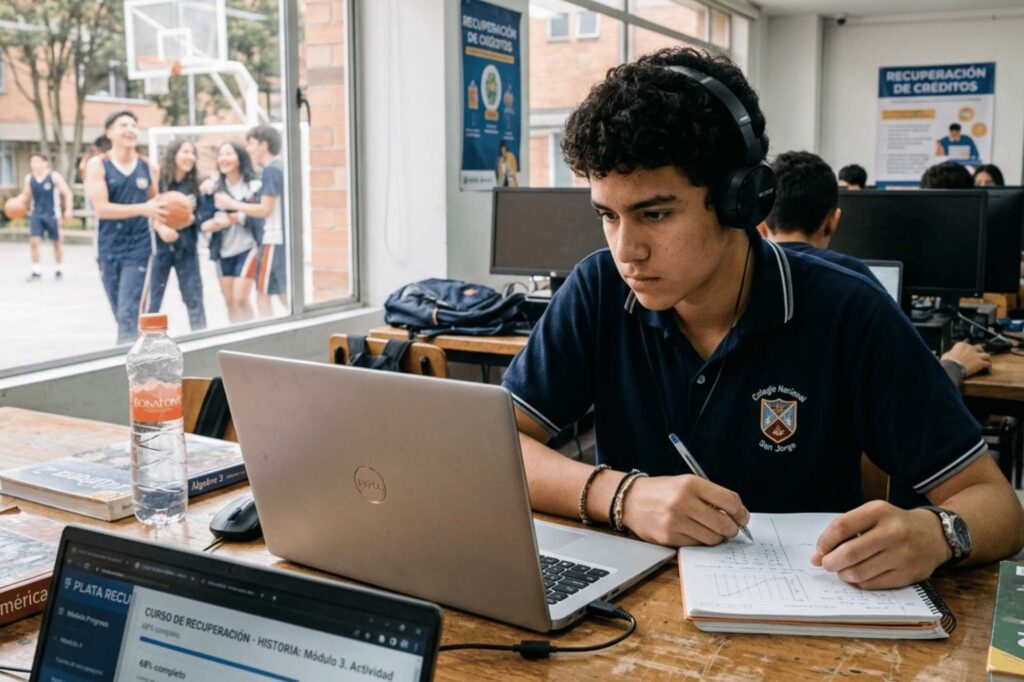
Credit recovery in high school requires a strategic approach that combines all the tools mentioned. To effectively improve your credits, consider enrolling in a credit recovery high school that offers flexible and personalized programs. These institutions understand the specific needs of students who need to catch up and have proven methodologies to accelerate learning without sacrificing educational quality.
Furthermore, don’t underestimate the power of consistent communication with your teachers and utilizing all available technological and academic resources. Academic recovery is a process that requires commitment, but with the right strategies, it is entirely achievable. Many online schools also offer special education programs tailored to different learning styles, which can make a significant difference in each student’s progress.
How to get high school credits fast
If your goal is to earn high school credits quickly, you should know that accelerated credit recovery is possible through intensive programs and summer courses. Many online schools offer self-directed learning options that allow students to progress at their own pace, completing modules more quickly as they master the material.
Credit retrieval programs often include diagnostic assessments that pinpoint exactly which areas need reinforcement, preventing students from repeating content they’ve already mastered. This strategy is crucial for fast and efficient academic recovery. The key is choosing the right program that fits your child’s pace and needs, maximizing every hour of study.
How to connect with other families to support credit recovery?
Students new to online education can learn a lot from families who already have experience. These connections provide great emotional support in the form of practical advice, encouragement, or simply a listening ear. If the school offers field trips or other in-person events, encourage your child to attend to make face-to-face connections. If these resources are not accessible, ask what online resources are available for parents to connect virtually. Sharing experiences about academic recovery with other families can provide fresh ideas and additional motivation. The parent-student community can be a vital support during this process, especially when facing similar challenges.
Take the first step toward academic recovery today
Credit recovery is a challenging but entirely achievable path with the right support. At MGM Online Academy, we offer personalized programs, certified teachers, and flexible schedules so your child can recover credits stress-free. Don’t wait any longer to give them the tools they need. Contact us today by phone or visit our website to schedule a consultation. Your academic success begins with a decision. We are here to help!
Frequently asked questions
Clear answers to the most common questions about how to recover academic credits online:
How long does it take to recover an academic credit?
The time varies depending on the program, but it generally ranges from 4 to 8 weeks per credit, depending on the time commitment and the chosen study method.
Can I combine academic recovery with sports activities?
Yes, but it is recommended to reduce extracurricular activities to a minimum during the first 4 weeks to focus entirely on credit recovery.
Which programs offer online credit recovery?
Most private online schools and many public institutions offer credit retrieval programsthroughout the year, including summer.
Is it possible to recover credits at no additional cost?
Some schools include academic recovery within the regular tuition, while others charge an additional fee per course.